& INSTRUCTORS
WORKSHOPS
SEPTEMBER 12 ● SEPTEMBER 13
2026 LINEUP IS HERE
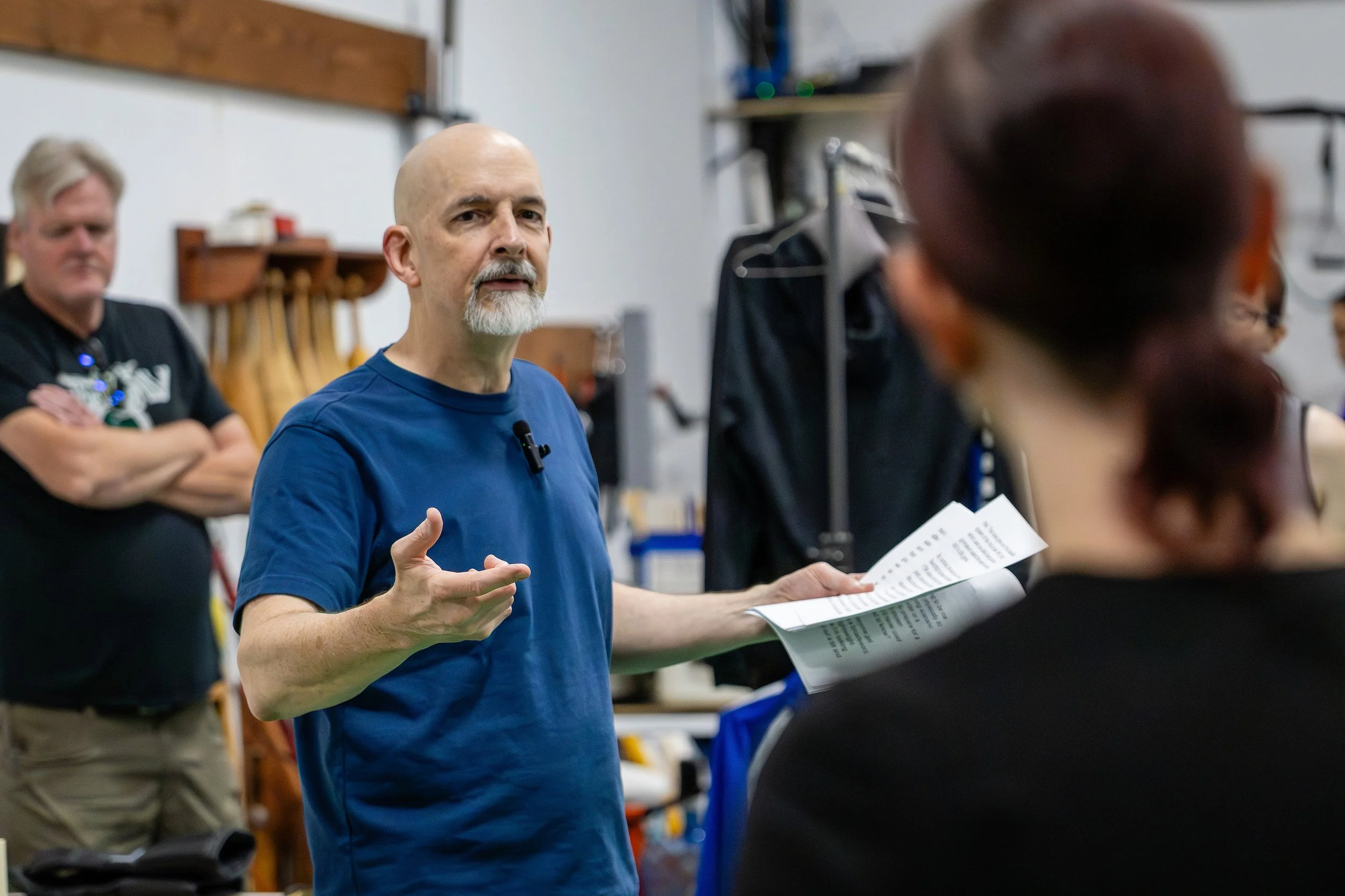
Since 2016 Swordsquatch has packed Saturday and Sunday with workshops from some of the best teachers in the Pacific Northwest and beyond. We include a wide range of weapons and traditions, with room for everyone from curious beginners to seasoned swordspeople.
This year we’re excited to invite some of the top HEMA community lecturers to share their knowledge with us. Register now to up your source game!
2026 INSTRUCTORS
MICHAEL CHIDESTER
WIKTENAUER
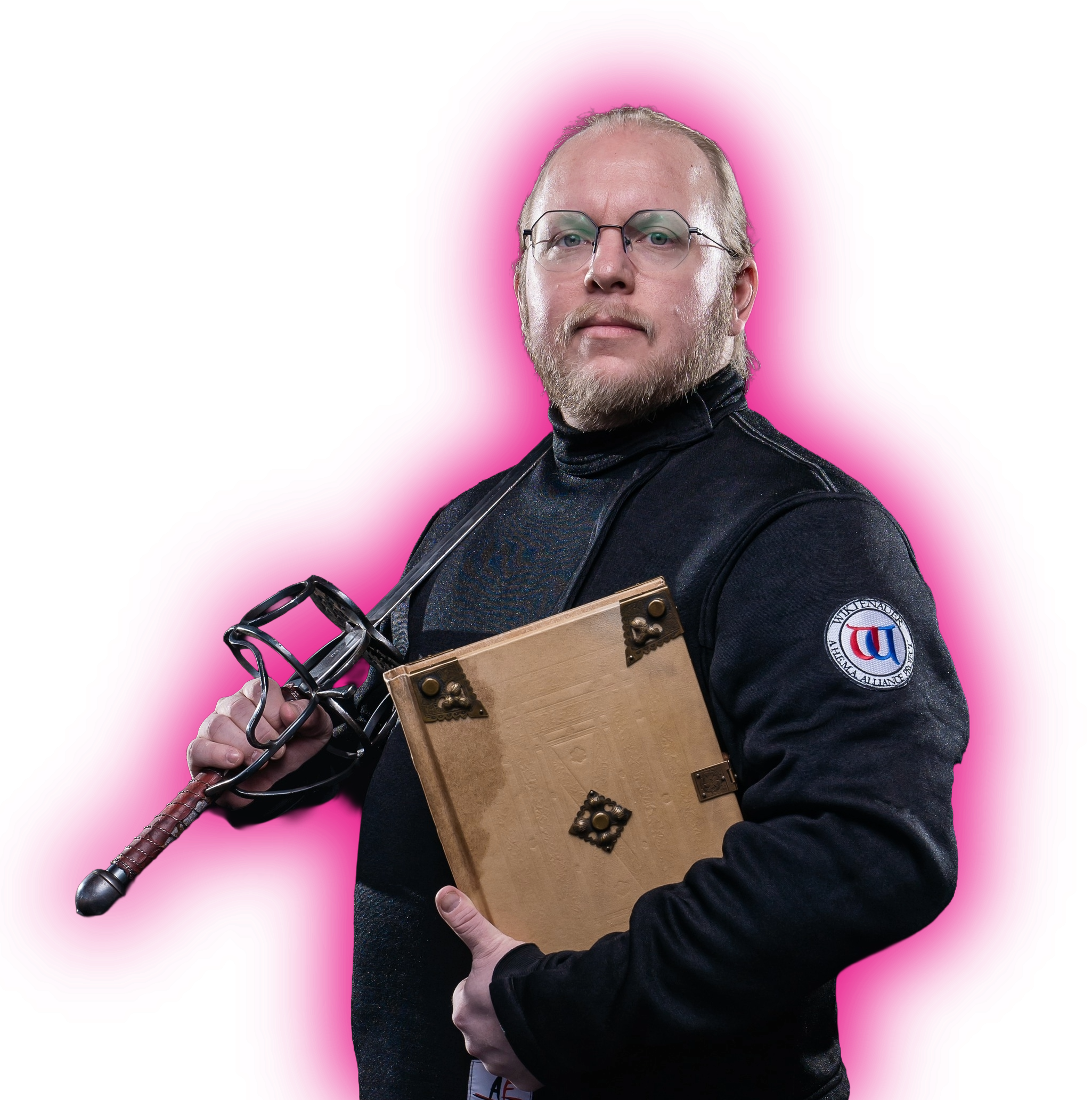
Michael Chidester has been studying historical European martial arts since 2001 and has been Editor-in-Chief of Wiktenauer since 2011. In 2019, he started a publishing company called HEMA Bookshelf to produce facsimiles of fencing manuals and publish translations and historical research.
Michael is a Research Scholar of the Meyer Freifechter Guild (MFFG), a founding member of the Society for Historical European Martial Arts Studies (SHEMAS), a member of the Western Martial Arts Coalition (WMAC), and a Lifetime Member of the HEMA Alliance.
He has lectured on historical martial arts across North America and Europe and has written several books, including The Flower of Battle: MS M 383 (2021), and The Long Sword Gloss of GNM Manuscript 3227a (2021), and Pieces of Ringeck (2024), and edited or contributed to many others. He currently trains at Athena School of Arms in Cambridge, MA.
What’s a Zettel anyway?
In this lecture, Michael will talk about Johannes Liechtenauer, the mysterious founder of the best-documented Medieval German fencing tradition, and the cryptic poem he left behind describing his teachings. He’ll cover how it's structured, what it teaches, how to study it, and why you should study it.
Book History Through the Lens of Joachim Meyer
There is much more to a book than just the words printed on its pages. Why and how was it made? Who bought it and what did they do with it? Who read it and what did they think of it? And did anyone in the 16th and 17th centuries actually use the fencing treatises to learn about fencing? In 2019, Michael, along with Sarah Barsness, set out to examine these and other questions by creating a definitive catalog of the surviving copies of the treatise of Joachim Meyer. This lecture will discuss Michael’s preliminary findings from personally examining four copies of the 1570 edition, five copies of the 1600, and looking at scans and descriptions of most of the 71 other known copies.
KENDRA BROWN
ATHENA SCHOOL OF ARMS
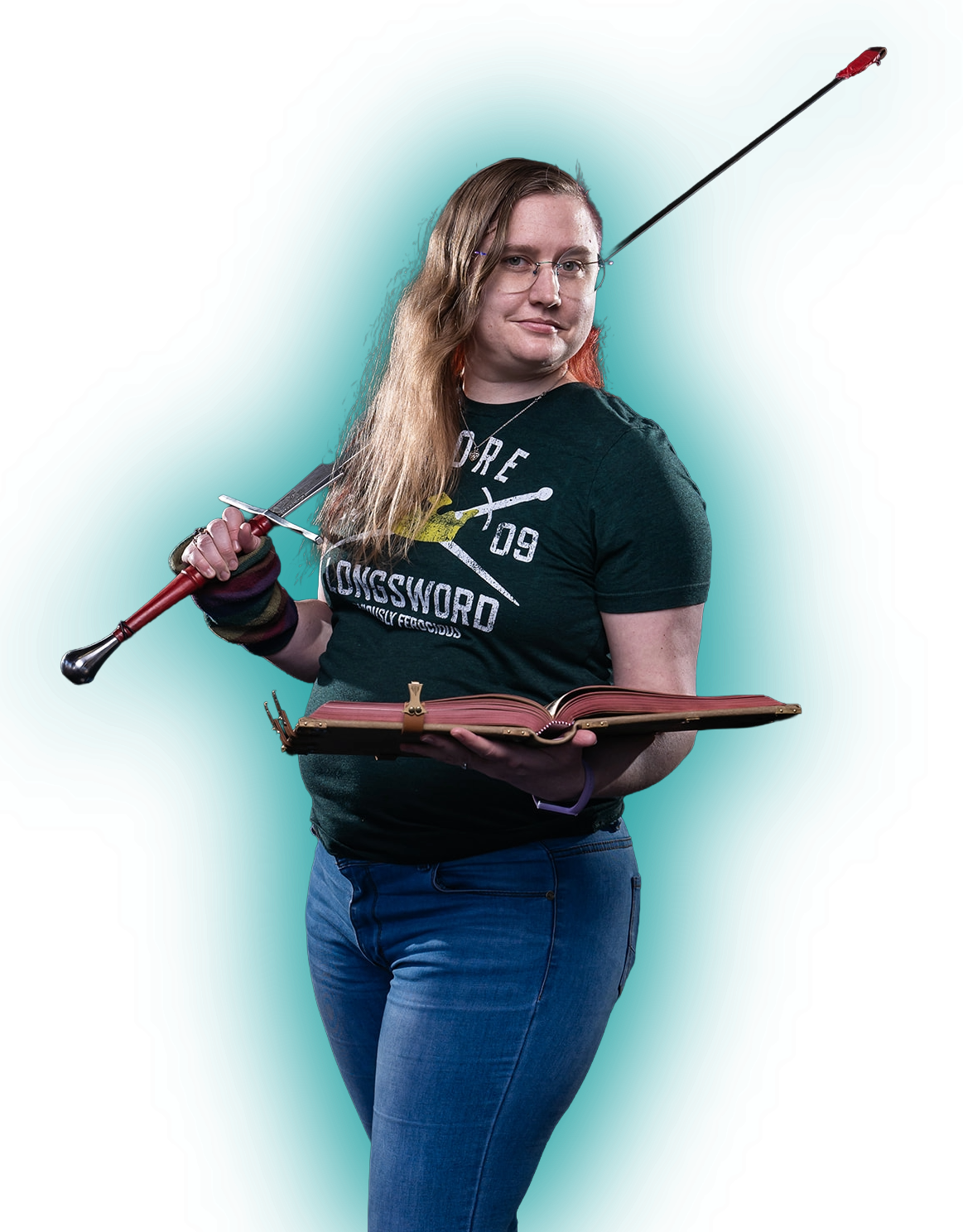
Kendra Brown does independent medieval manuscript research in her free time, and trains and sometimes teaches at Athena School of Arms. She started translating historical fencing sources in 2003 with the Higgins Armory Sword Guild, and currently is working on an updated translation of the Latin Fiore manuscript in collaboration with Dr. Rebecca Garber. They will probably publish the Latin Lew gloss someday.
Kendra's irregular research blog is called Darth Kendra Research, and she has a forthcoming article in Acta Periodica Duellatorum. She has appeared at events in the US and Europe as well as in podcasts and video series including Fencing by the Book, The Sword Guy, and the CKDF Plague Lectures. If terms like "side-eye strike", "stance of the serene leopard", or "very deep rabbit hole research disaster area" excite you, you'll get along great. Kendra also enjoys rondel dagger, polearms, and frequently longsword.
How to get hooked on manuscripts
Manuscripts that contain fencing treatises are the root of most Western Martial Arts study. However, fencing treatises are only one tiny, unusual category of late medieval and early modern manuscripts. Getting a more complete picture of life in the past requires additional sources. Conveniently, modern digitization and web technology makes it possible to browse and study manuscripts from anywhere in the world. If you're interested in primary source research but don't know where to start, or just want to know what other kinds of manuscripts existed alongside the ones we know and love, this talk is for you.
Parallel sources: translating words to techniques
Roll up your sleeves. Kendra goes back to the source to examine some Liechtenauer techniques with a sword in one hand and a text in the other. By comparing the same sections from Paulus Hector Mair's Latin and German manuscripts, we'll get some new perspectives on how the Lew gloss was understood in the 16th century and how small differences in words can make big differences in how we move swords around. Kendra will be using texts describing Liechtenauer longsword techniques, but students of any weapon or tradition are welcome.

SIGMUND WERNDORF
LOS ANGELES HISTORICAL MARTIAL ARTS SOCIETY
Sigmund Werndorf has been doing HEMA for ten years with a holistic focus on early Liechtenauer and the scholarship surrounding it. He's a multi-gold medalist in longsword and co-founder of the Los Angeles Historical Martial Arts Society. He is a returning Swordsquatch lecturer.
In 2025, Sigmund attended Feldlager at Brandenburg Castle. Feldlager is a unique event held every two years in Thuringia, Germany. Blending HEMA, historical re-enactment, military simulation, and LARP, it creates a sandbox for the exploration of medieval warfare at the unit level similar to how HEMA aims to explore and recreate the art and experience of an individual combatant. Last year's 2025 Feldlager had over two hundred infantry and fifty cavalry, allowing for an unprecedented scale of combat. Sigmund will share an inside look at the philosophy, culture, lessons, and experience of attending Feldlager.
Feldlager
Feldlager at Brandenburg Castle is a unique event held every two years in Thuringia, Germany. Blending HEMA, historical re-enactment, military simulation, and LARP, it creates a sandbox for the exploration of medieval warfare at the unit level similar to how HEMA aims to explore and recreate the art and experience of an individual combatant. Last year's 2025 Feldlager had over two hundred infantry and fifty cavalry, allowing for an unprecedented scale of combat. This presentation will give you an inside look at the philosophy, culture, lessons, and experience of attending Feldlager.
The Art of Constraint
This workshop will focus on Zwingen (constraining, forcing), a key but understudied component of early Liechtenaur fencing. We’ll look at the way the point is used to pressure the opponent, forcing them into the Nach and choosing between parrying or being hit. We’ll dive into both the place Zwingen has in the Zettle’s art as well as the technique and psychology to making it work reliably in practical use.
ARE YOU HYPED YET?
Register now and join us for our exciting 2026 lecture series.